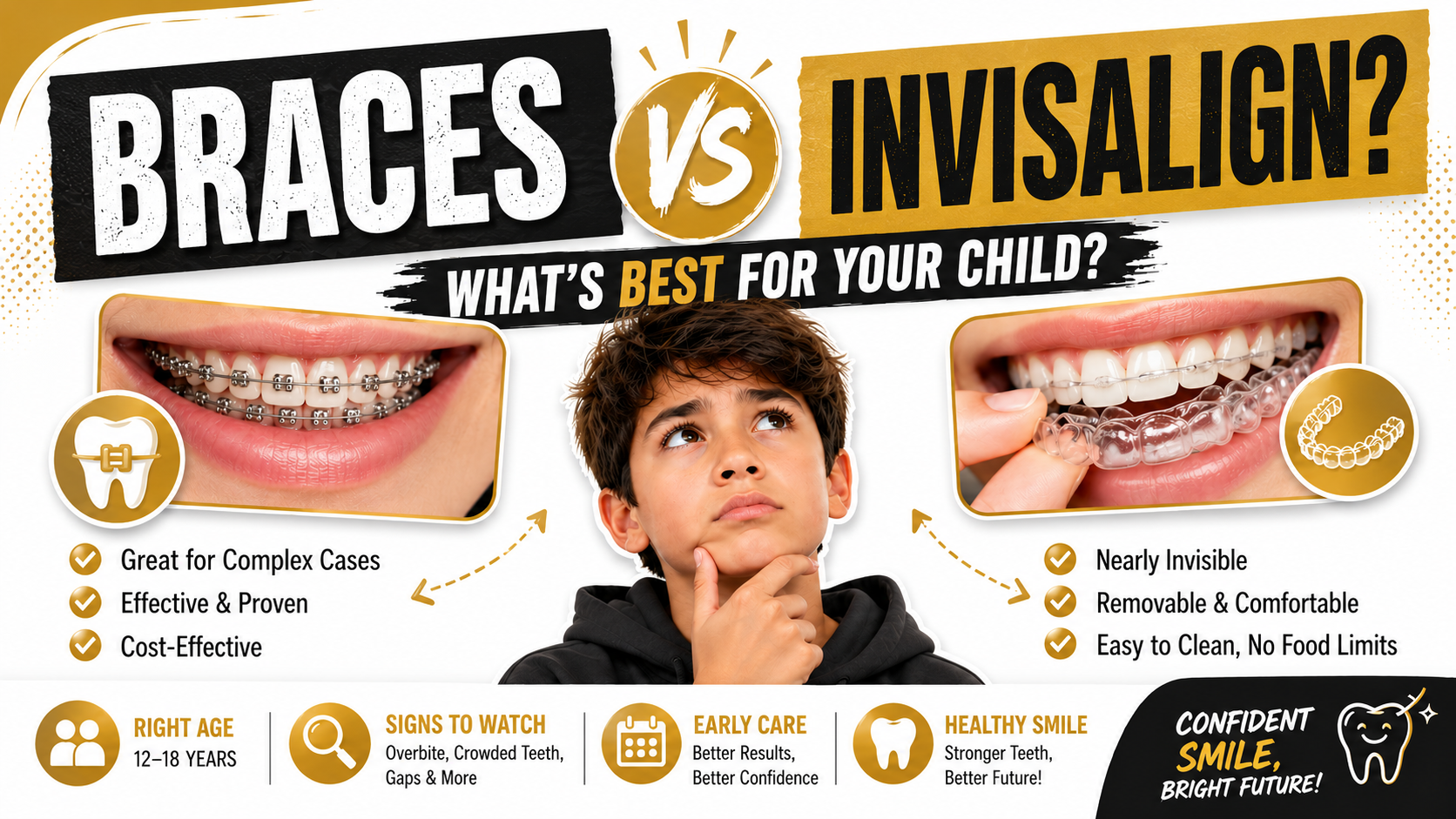
In this guide, we'll discuss how to identify if your child needs braces, the ideal age for treatment, and the key differences between braces and Invisalign to help you make an informed decision.
How to Know if Your Child Needs Braces
Orthodontic treatment is commonly recommended for children with issues such as overbites, crowded teeth, protruding teeth, deep bites, gaps between teeth, and jaw misalignment.
Common Signs Your Child May Need Orthodontic Treatment
- Difficulty chewing or biting food
- Persistent thumb sucking
- Mouth breathing
- Visible gaps between teeth
- Slurred or unclear speech
- Jaw protrusion or uneven jaw alignment
- Overlapping or rotated teeth
- Crowded or crooked teeth
If you notice any of these symptoms, consulting an orthodontist early can help prevent more complex dental issues in the future.
What Is the Right Age for Braces?
Although there is no strict age limit for orthodontic treatment, most orthodontists recommend braces between the ages of 12 and 18 years. During this stage, the jaws and teeth are still developing, making treatment faster and more effective.
Benefits of Early Orthodontic Treatment
- Helps prevent future dental complications
- Reduces the risk of severe alignment problems
- Improves oral hygiene and overall dental health
- Enhances confidence and self-esteem
- Allows children to undergo treatment alongside their peers, reducing social discomfort
Early intervention often leads to simpler and more successful outcomes.
Types of Braces and Clear Aligners
Today, parents have several orthodontic options to choose from depending on their child's dental condition and lifestyle preferences.
Metal Braces
Metal braces are the traditional and most commonly used orthodontic treatment.
Benefits
- Highly durable
- Effective for complex dental corrections
- More affordable compared to other options
Considerations
- Visible brackets and wires
- May cause temporary discomfort
- Require dietary restrictions and extra cleaning care
Ceramic Braces
Ceramic braces function similarly to metal braces but use tooth-colored brackets for a more discreet appearance.
Benefits
- Less noticeable
- Popular among image-conscious teenagers
- Effective for various orthodontic concerns
Considerations
- Slightly more expensive than metal braces
- Brackets can stain if not properly maintained
Clear Aligners (Invisalign)
Invisalign uses a series of custom-made, nearly invisible trays that gradually move teeth into their desired position.
Benefits
- Virtually invisible appearance
- Comfortable and removable
- Easier to maintain oral hygiene
- No food restrictions
Considerations
- Suitable primarily for mild to moderate alignment issues
- Requires strong patient commitment
- Must be worn for at least 22 hours per day
- Can be more expensive than traditional braces
Braces vs. Invisalign: Key Differences
Traditional Braces
- Fixed to the teeth and require periodic adjustments.
- Highly effective for complex orthodontic problems.
- Generally more affordable.
- Require dietary restrictions and careful cleaning.
Invisalign Clear Aligners
- Consist of removable, transparent trays.
- Nearly invisible and more comfortable.
- Easier to brush and floss.
- No food restrictions.
- Best suited for mild to moderate cases.
- Require wearing for at least 22 hours daily.
Pros and Cons of Braces
Advantages of Braces
- Highly effective for complex orthodontic problems
- Cost-effective treatment option
- No risk of forgetting to wear them
Disadvantages of Braces
- More visible than aligners
- May cause irritation to the cheeks and gums
- Require careful cleaning
- Certain foods need to be avoided
Pros and Cons of Invisalign
Advantages of Invisalign
- Nearly invisible appearance
- Removable during meals and brushing
- Comfortable and convenient
- No dietary restrictions
Disadvantages of Invisalign
- Not suitable for severe misalignments
- Requires consistent wear for at least 22 hours daily
- Can be more expensive than braces
- Treatment success depends heavily on patient compliance
Why Consider Invisalign for Your Child?
Invisalign has become increasingly popular because it offers a combination of aesthetics, comfort, and flexibility.
Key Benefits of Invisalign
- Nearly invisible aligners boost confidence.
- Easy removal allows children to enjoy their favorite foods without restrictions.
- Simplifies brushing and flossing, promoting better oral hygiene.
- Comfortable design reduces irritation caused by brackets and wires.
- Advanced technology helps predict tooth movement and treatment outcomes.
- Proper alignment supports long-term dental health and confidence.
For children and teenagers who may feel self-conscious about wearing visible braces, Invisalign provides a discreet and convenient alternative.
Choosing Between Braces and Invisalign
There is no one-size-fits-all solution when it comes to orthodontic treatment. The right choice depends on:
- Your child's specific dental condition
- The severity of misalignment
- Lifestyle and daily habits
- Budget considerations
- Recommendations from your orthodontist
Both braces and Invisalign can deliver excellent results when used appropriately.
Conclusion
Modern orthodontic treatments have made achieving a straighter, healthier smile easier than ever. Whether your child requires traditional braces or prefers the discreet appearance of Invisalign, early intervention can help prevent future dental problems and improve overall oral health.
Ultimately, the best treatment option depends on your child's unique needs and your orthodontist's professional advice. By choosing the right solution at the right time, you can help your child enjoy a confident smile that lasts a lifetime.
Frequently Asked Questions
At what age should a child get braces?
Most orthodontists recommend braces between the ages of 12 and 18, although treatment can begin earlier depending on the child's dental development.
Is Invisalign better than braces for kids?
Invisalign is ideal for mild to moderate alignment issues and offers greater convenience, while traditional braces are often more effective for severe or complex cases.
How many hours should Invisalign aligners be worn each day?
For effective results, Invisalign aligners should be worn for at least 22 hours a day.
Are braces more affordable than Invisalign?
In many cases, traditional braces are more cost-effective, whereas Invisalign may involve higher treatment costs.
Can early orthodontic treatment prevent future dental problems?
Yes. Early intervention can reduce the severity of alignment issues and help avoid more complicated treatments later in life.