What Are Dental Veneers?
Dental veneers are ultra-thin, custom-made shells that are bonded to the front surface of your teeth to improve their appearance. They are commonly made from:
- Porcelain
- Composite Resin
- Advanced Ceramic Materials such as Lithium Disilicate
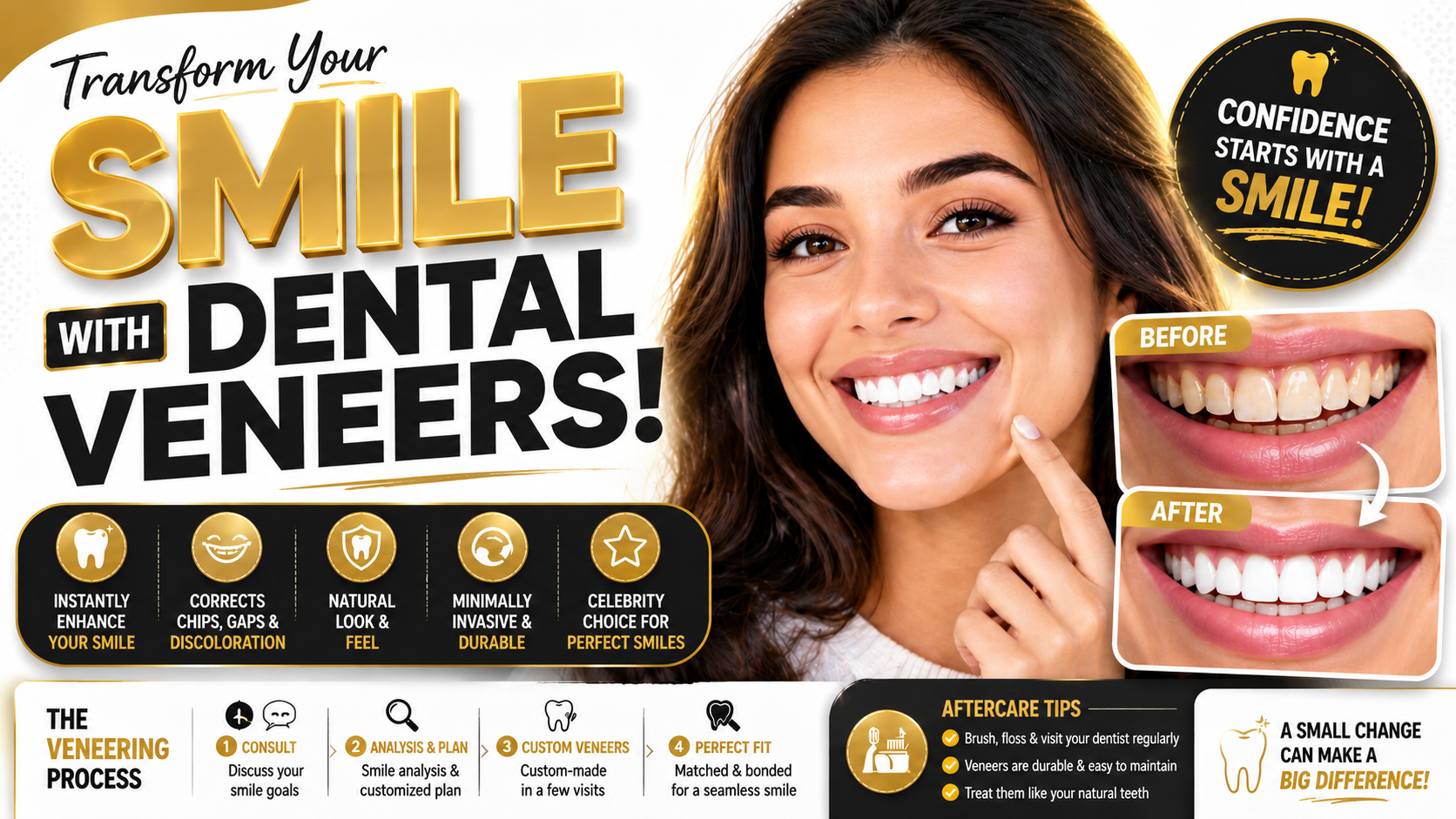
Veneers are designed to conceal dental imperfections while enhancing the shape, size, alignment, and color of your teeth. The result is a stunning, natural-looking smile that blends seamlessly with your existing teeth.
Dental Veneers Can Correct:
- Tooth discoloration and stains
- Chipped or cracked teeth
- Small gaps between teeth
- Uneven tooth shapes
- Worn teeth
- Mildly misaligned teeth
Why Choose Dental Veneers?
Dental veneers have become one of the most sought-after cosmetic dentistry procedures because they provide instant and long-lasting smile enhancements.
Instantly Improve Your Smile
Veneers effectively hide stains, chips, cracks, and uneven surfaces, giving your teeth a brighter and more youthful appearance.
Correct Minor Alignment Issues
Small gaps and mild misalignment can often be corrected without the need for braces or extensive orthodontic treatment.
Achieve a Natural and Balanced Smile
Modern veneers closely mimic the appearance of natural enamel, creating a radiant and harmonious smile.
Minimally Invasive Treatment
Unlike dental implants or extensive restorative procedures, veneers require only minimal tooth preparation, preserving much of your natural tooth structure.
Celebrity-Worthy Smile Transformation
Dental veneers have long been a favorite among celebrities and individuals seeking a picture-perfect smile.
The Dental Veneering Process: Step by Step
Getting dental veneers is a simple and comfortable procedure that typically requires only a few visits to your dentist.
1. Consultation and Smile Analysis
Your dentist will examine your teeth, discuss your smile goals, and create a customized treatment plan. Digital imaging or a physical mock-up may be used to help you visualize your future smile.
2. Tooth Preparation
A very thin layer of enamel is gently removed to ensure a perfect fit. Impressions are then taken and sent to a dental laboratory for the fabrication of your custom veneers. Temporary veneers may be placed while your permanent ones are being created.
3. Trial and Cementation
Once your veneers are ready, your dentist will check their shape, size, and shade to ensure they meet your expectations. The veneers are then securely bonded to your teeth for a long-lasting and natural-looking result.
4. Follow-Up and Maintenance
Routine dental check-ups help ensure that your veneers remain comfortable, functional, and aesthetically pleasing for many years.
Types of Dental Veneers
Different materials are available to suit various budgets and aesthetic preferences.
Composite Veneers
Composite veneers are a cost-effective option that offers good aesthetics and can often be completed in a single visit.
Benefits
- More affordable
- Faster treatment
- Good cosmetic results
Considerations
- Less durable than porcelain
- More susceptible to staining
Porcelain and Zirconia Veneers
Porcelain and zirconia veneers are highly popular because of their exceptional durability and natural appearance.
Benefits
- Excellent aesthetics
- Highly stain resistant
- Long-lasting results
Considerations
- Higher cost compared to composite veneers
- Requires multiple appointments
Lithium Disilicate Veneers
Lithium disilicate veneers are considered a premium option due to their strength and lifelike appearance.
Benefits
- Superior durability
- Extremely natural appearance
- Excellent translucency
Considerations
- Premium pricing
- Requires skilled expertise for placement
Factors Affecting the Cost of Dental Veneers
The overall cost of veneers may vary depending on several factors, including:
- Type of material used
- Number of teeth being treated
- Experience and expertise of the dentist
- Geographic location of the dental clinic
- Any additional treatments required before veneer placement
How to Take Care of Your Dental Veneers
Proper maintenance can help your veneers last for many years while preserving their beauty.
Maintain Good Oral Hygiene
- Brush your teeth twice daily.
- Floss regularly.
- Visit your dentist every six months.
- Use non-abrasive toothpaste for cleaning.
Avoid Excessive Pressure
Avoid biting hard foods, ice, or non-food objects with veneered teeth to prevent damage.
Limit Staining Foods and Beverages
Although veneers are stain-resistant, reducing the intake of coffee, tea, red wine, and tobacco products can help maintain their brightness.
Wear a Mouthguard if You Grind Your Teeth
If you suffer from teeth grinding or clenching, wearing a night guard can protect your veneers from excessive wear.
Additional Benefits of Dental Veneers
Beyond cosmetic improvements, veneers offer several practical advantages:
- Highly stain resistant
- Strong and durable
- Comfortable and natural feeling
- Require minimal maintenance
- Enhance self-confidence and overall appearance
- Allow you to smile freely and confidently
Are Dental Veneers Worth It?
Dental veneers are one of the most effective cosmetic dentistry solutions for achieving a beautiful smile quickly and comfortably. Their ability to provide dramatic aesthetic improvements with minimal tooth alteration makes them a worthwhile investment for many individuals.
Small in size but transformative in impact, veneers combine convenience, durability, and stunning aesthetics to deliver life-changing results.
Conclusion
Dental veneers offer a practical, minimally invasive, and highly effective way to achieve the smile you've always wanted. Whether you're looking to correct discoloration, chips, gaps, or mild alignment issues, veneers provide fast and natural-looking results that can dramatically enhance your confidence.
For long-lasting results, choose an experienced dentist and a reputable dental clinic, and maintain excellent oral hygiene habits. With proper care, your veneers can provide years of beautiful, confident smiles.
Ready for your smile makeover? Consult your dentist today and take the first step toward a brighter, more radiant, and confident you.
Frequently Asked Questions
How long do dental veneers last?
Porcelain veneers typically last between 10 and 15 years or longer with proper care, while composite veneers generally last 5 to 7 years.
Are dental veneers painful?
The procedure is minimally invasive and usually involves little to no discomfort. Most patients experience only mild sensitivity after treatment.
Can veneers replace braces?
Veneers can correct minor gaps and mild alignment issues, but severe orthodontic problems may still require braces or clear aligners.
Do veneers look natural?
Yes. Modern veneers are carefully designed to mimic the color, texture, and translucency of natural teeth for a seamless appearance.
Are dental veneers stain-resistant?
Porcelain veneers are highly stain-resistant and maintain their brightness for many years with proper care.